Source Square Pointed Shovel for Farming, Gardening, and Building
Explore 30 listings for the square pointed shovel, featuring carbon steel heads and wooden handles. Compare models like S522L and S511 for farming, gardening, and building applications. Options include multifunctional designs with or without attachments, shipped from Tangshan, China; compare the available evidence and request quotations based on your requirements.
Key considerations
Products List


Comprehensive Sourcing Guide
Square Pointed Shovel Sourcing Guide
Procuring square pointed shovels requires distinguishing between general garden tools and heavy-duty agricultural implements, as the supply chain often blends these categories. Buyers must verify whether the listed product is designed for loose soil excavation in farming or for precise landscaping tasks in gardens, since the blade geometry and handle length vary significantly between these use cases. The observed market data indicates a wide range of applications, including coal handling and concrete work, which suggests that a single listing may not suit every specific operational need without careful specification review.
Sourcing decisions should also account for the material composition of the shovel head and handle, as these directly impact durability and user fatigue. The available inventory frequently features carbon steel or railway steel heads paired with wooden or unspecified handles, creating distinct performance profiles for different environments. A buyer must confirm that the selected model matches the intended workload, ensuring that the steel grade can withstand the abrasion of rocky soil or the impact of heavy digging without premature failure or deformation.
Product Scope and Observed Listing Signals
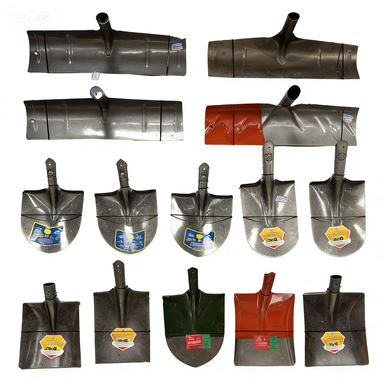
The current market listings for square pointed shovels reveal a diverse array of product models, ranging from specific codes like S522L and S511 to generic descriptions such as "garden shovel." These signals indicate that suppliers often group various configurations under broad categories, making it essential for buyers to cross-reference model numbers with physical attributes like blade length and shape. The presence of both "Sharp Spade" and "Square Shovel" designations suggests that the term "square pointed" may encompass a spectrum of blade profiles, requiring precise visual confirmation before placing an order.
Listing signals also highlight significant variations in packaging and shipping units, which can affect logistics planning and cost calculations. Some suppliers offer single-item sales, while others provide bulk packaging such as 20 pieces per carton or 12 pieces per PVC bag. These differences in packing standards, alongside the observation of "Sea Transportation" as a primary delivery method, imply that buyers must align their order quantities with the supplier's standard packing configurations to avoid excessive shipping costs or inventory fragmentation.
Technical Specifications to Verify
Buyers must rigorously verify the blade dimensions and overall specifications, as the data shows a mix of "Medium" and "Small" sizes alongside specific measurements like 290x240mm. The absence of a universal standard for blade length in the provided facts necessitates a direct request for detailed drawings or physical samples to ensure the tool fits the user's height and the specific soil conditions. Relying on generic terms like "other" for blade length or handle material introduces significant risk, as these vague descriptors do not guarantee the structural integrity required for heavy-duty applications.
The functional capabilities of the shovel, described variously as "Multifunctional" or "Single Function," require clear definition to match the intended operational scope. While some listings claim versatility for farming, gardening, and building, others specify usage for snow removal or coal handling, indicating that the tool's design is highly specialized. Procurement teams should confirm whether the shovel includes attachments or remains a standalone unit, as the presence or absence of these components fundamentally alters the tool's utility and compatibility with existing equipment.
Compliance and Safety Documentation
Safety compliance for manual digging tools often centers on the structural integrity of the steel head and the secure attachment of the handle, rather than complex electronic certifications. Buyers should request evidence that the carbon steel or railway steel used meets specific tensile strength requirements to prevent blade breakage during high-impact use. Although specific safety standards are not explicitly listed in the provided facts, the material composition suggests that the product must adhere to general industrial safety norms regarding sharp edges and load-bearing capacity to protect the operator.
Documentation regarding the origin of the product is critical for verifying supply chain transparency and potential trade compliance issues. The observed data points to origins in Tangshan, Hebei, and Xingang, Tianjin, which are known industrial hubs in China. Procurement teams should ensure that the supplier provides clear documentation confirming the place of origin and that the manufacturing process adheres to local labor and environmental regulations, as these factors can influence the long-term reliability and ethical standing of the supply relationship.
Cost Drivers and Commercial Terms
The price range observed in the market, spanning from 0.1 to 2000 USD, reflects a vast disparity in product quality, material grade, and order volume. This wide variance suggests that low-cost options may utilize thinner steel or lower-quality wood, while premium listings likely feature reinforced heads and ergonomic handles. Buyers must correlate the unit price with the specific material specifications, such as the use of railway steel versus standard carbon steel, to ensure that the cost reflects the actual durability and performance expected for the intended application.
Commercial terms, including Minimum Order Quantities (MOQ) and delivery lead times, are significant factors in the total cost of ownership. The observed MOQ range of 1 to 3000 units allows for flexibility, but buyers must balance the need for small trial orders against the economies of scale offered by larger purchases. Additionally, the delivery port of Xingang, Tianjin, implies that sea freight is the primary mode of transport, which requires buyers to factor in transit times and potential port delays when planning their inventory replenishment cycles.
Supplier Qualification and Quality Control
Supplier qualification should focus on their ability to provide consistent customization support, as the data indicates that some listings offer OBM services while others specify "Customized" or "Non-Customized" options. Buyers must assess whether the supplier can accommodate specific requests for handle length, blade width, or branding, as this flexibility is often a key differentiator in the competitive shovel market. Verifying the supplier's capacity to maintain quality across different production batches is essential, especially when dealing with custom orders that deviate from standard models.
Quality control protocols must address the consistency of the steel composition and the finish of the shovel head to prevent rust and wear. Given that the material is listed as steel or railway steel, buyers should request samples to test for hardness and corrosion resistance before committing to large orders. The presence of specific model numbers like S518ML and S5109TW suggests that suppliers have established production lines, but buyers must still implement incoming quality checks to ensure that the final product matches the agreed-upon specifications and performance standards.
Long-Term Procurement Checks
Establishing a long-term procurement strategy requires regular audits of the supplier's ability to maintain consistent product specifications over time. Buyers should monitor changes in material sourcing, such as shifts in steel grades or handle materials, which could inadvertently alter the tool's performance characteristics. Continuous communication with the supplier regarding any updates to the product model or production process is vital to ensure that the shovels remain suitable for the evolving demands of the farming, gardening, or construction sectors.
Performance tracking of the shovels in the field provides critical feedback on durability and user satisfaction, which should inform future purchasing decisions. Buyers should collect data on blade wear, handle breakage, and overall user feedback to validate the initial quality assessments. By maintaining a record of product performance against the original specifications, procurement teams can make data-driven decisions about whether to continue with the current supplier or explore alternative sources that better meet the long-term operational requirements.
FAQs
What materials are used for square pointed shovels?
Square pointed shovels are typically constructed from carbon steel or railway steel for the blade to ensure durability and resistance to wear. The handles are commonly made from wood, providing a traditional grip and shock absorption. Some models may utilize other materials for specific functional requirements, but steel and wood remain the standard combination for heavy-duty gardening and farming applications.
Can square pointed shovels be customized for specific needs?
Yes, customization is available for square pointed shovels to meet specific operational requirements. Buyers can request OBM support for tailored manufacturing processes. While some items are listed as non-customized, the product line generally supports custom orders. This allows for adjustments in blade dimensions, handle materials, or branding to suit particular agricultural or construction tasks effectively.
What are the common applications for square pointed shovels?
Square pointed shovels are versatile tools used for gardening, farming, and building projects. They are ideal for digging, trenching, and moving materials like soil, coal, or concrete. The sharp spade design facilitates efficient penetration into hard ground. Their multifunctional nature makes them suitable for both professional construction sites and home garden maintenance tasks requiring precision and strength.
How are square pointed shovels packaged for shipping?
Packaging varies by model, with common options including 20 pieces per carton or 12 pieces per PVC bag. Some units are packed in simple bags for sea transportation. The packaging is designed to protect the steel blades and wooden handles during transit. Proper packing ensures that the shovels arrive in good condition, ready for immediate use in various industrial or agricultural settings.
Where are square pointed shovels typically manufactured and shipped?
These shovels are primarily manufactured in Tangshan, Hebei, China. The standard delivery port is Xingang in Tianjin, with shipments sent by sea. This location is a key hub for steel product manufacturing, ensuring efficient logistics for global buyers. The origin and shipping route are optimized for cost-effective transportation of heavy industrial tools to international markets.
What specifications are available for square pointed shovels?
Specifications include various models such as S522L, S511, and S518ML, catering to different sizes and weights. Blade lengths and handle materials may vary, with options ranging from small to medium specifications. Some models feature a sharp spade shape, while others are square shovels. Buyers should check specific model details for exact dimensions and weight standards to match their project requirements.